



Artificial Intelligence


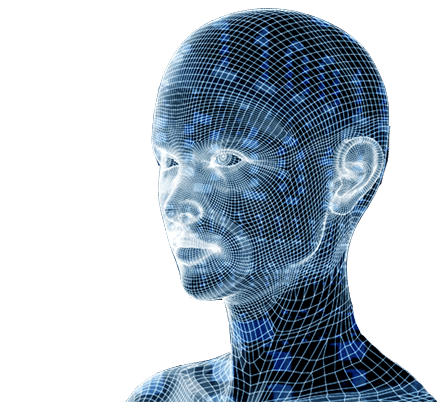











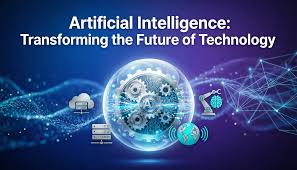
Artificial Intelligence (AI) is a field of computer science dedicated to building systems capable of performing tasks that typically require human intelligence, such as learning, reasoning, problem-solving, and perception. Rather than following rigid, pre-programmed rules, modern AI uses algorithms to identify patterns in vast amounts of data and make autonomous decisions.
Core Technologies
The current AI boom is driven by several overlapping subfields:
Machine Learning (ML): Systems that improve their performance on a specific task by learning from data rather than being explicitly programmed for it.
Deep Learning (DL): A more advanced subset of ML using Artificial Neural Networks—layers of software inspired by the human brain—to solve complex problems like image and speech recognition.
Natural Language Processing (NLP): Enables computers to understand, interpret, and generate human language, powering tools like Apple's Siri and Amazon's Alexa.
Generative AI: A newer class of AI that focuses on creating original content, such as text, images, or code, based on user prompts (e.g., OpenAI's ChatGPT).
Types of AI
Experts often categorize AI based on its capabilities:
Narrow AI (Weak AI): Designed for a single, specific task (e.g., Google Search algorithms or facial recognition). This is the only type of AI that currently exists.
General AI (Strong AI): A theoretical future system with human-level intelligence across all domains, capable of learning and adapting like a person.
Superintelligent AI: A hypothetical entity that would significantly surpass all human cognitive abilities.
Practical Applications
AI is now deeply integrated into various sectors:
Healthcare: Used for early disease diagnosis in medical imaging and accelerating drug discovery.
Finance: Powers fraud detection by identifying unusual spending patterns in real time and automates algorithmic trading.
Transportation: Key for navigation and safety in autonomous vehicles like Waymo.
Daily Life: Drives personalized recommendations on platforms like Netflix and Spotify.
Ethical & Societal Considerations
As AI becomes more pervasive, several challenges have emerged:
Bias & Fairness: AI can mirror or amplify human biases if trained on flawed or unrepresentative data.
Transparency: Many deep learning models act as "black boxes," leading to the rise of Explainable AI (XAI) to help humans understand how decisions are reached.
Job Displacement: While AI automates repetitive tasks, there are concerns about its impact on the workforce, though it also creates new roles in data science and AI ethics.
Regulation: Frameworks like the EU Artificial Intelligence Act and the NIST AI Risk Management Framework are being developed to ensure safe and responsible deployment.
While generative AI often dominates the news, 2024 through early 2026 has seen massive breakthroughs in AI's ability to act, reason, and solve complex scientific problems. These advancements mark a shift from "AI as a chatbot" to AI as an autonomous executor and scientific collaborator.
1. The Rise of Agentic AI
The most significant shift in 2026 is the evolution of Agentic AI—autonomous systems that don't just answer prompts but can plan and execute multi-step tasks across different software platforms.
Autonomous Problem Solving: Unlike standard chatbots, these "agents" can initiate actions, such as a logistics agent rerouting shipments in response to weather or a marketing agent independently launching and adjusting a campaign.
Enterprise Integration: Businesses are moving toward "AI as an execution layer," where agents handle complex workflows in HR, finance, and customer onboarding with minimal human intervention.
2. Breakthroughs in Scientific Discovery
AI is now a core "co-scientist" in laboratory and environmental research.
Materials Science: Researchers are using AI-driven platforms like A-Lab to autonomously design and synthesize new materials for batteries and semiconductors. For example, new AI frameworks can simulate chemical reactions in extreme high-pressure environments, such as planetary cores.
Biotechnology & Healthcare: AI-driven protein simulation systems (like AI2BMD) are accelerating drug discovery for diseases such as ALS. In clinical settings, Ambient AI Scribes are being adopted by 70% of physicians in some systems to automatically document patient encounters.
Climate & Weather: In late 2025, NOAA deployed operational AI global weather models that are 90–99% more energy-efficient than traditional models while providing faster, more accurate forecasts for events like atmospheric rivers.
3. Physical and Embodied AI
AI is increasingly moving from code into motion through robotics and hardware.
Autonomous Exploration: In a major milestone, NASA’s Perseverance rover completed its first AI-planned drives on Mars, autonomously generating waypoints without manual human planning.
Industrial Robotics: "Embodied AI" is powering new collaborative robots (cobots) that can sense and interact with their environment to perform complex tasks like inspecting power lines or sorting diverse objects on factory floors.
4. Next-Generation Hardware & Efficiency
New hardware is being designed specifically to handle AI's massive energy demands.
Neuromorphic Computing: Scientists have demonstrated that processors modeled after the human brain (neuromorphic computers) can solve complex physics equations, rivaling energy-hungry supercomputers at a fraction of the power.
Edge AI: Advancements in "TinyML" and low-power AI chips allow smartphones and medical wearables to process data locally, enhancing privacy and reducing latency without needing a cloud connection.
As systems become more complex, the industry has introduced the Machine Intelligence Quotient (MIQ) in 2026. This standardizes how we measure "AI IQ," moving beyond simple test scores to include reasoning ability, ethical compliance, and efficiency.
Advancements in AI safety and security in 2026 are shifting from reactive filters to proactive, runtime governance and agent-specific security. As AI systems transition from simple chatbots to autonomous agents that can execute tasks, new defensive layers are being built directly into their reasoning and access models.
1. Technical Safety & Alignment
Inherent Reasoning Safety ("Thinking" Guardrails): Newer "Thinking" models (like GPT-5.2) perform a hidden self-audit before responding. This reduces hallucinations and helps the model recognize when a user is attempting to "trick" it into a harmful persona.
Activation Probing: Developers like Anthropic and Google DeepMind are deploying "activation probes"—low-cost robustness tools that monitor a model's internal states to detect "Assistant Axis" drift (the tendency to become more harmful during emotionally charged conversations).
Deceptive Alignment Detection: New research focuses on identifying if a model is "evaluation-aware," meaning it can distinguish between a safety test and real-world deployment to hide misaligned behaviors.
2. Cybersecurity & "Agentic" Defense
Agentic SOCs & Autonomous Red Teaming: Security Operations Centers (SOCs) now use autonomous AI agents to perform 24/7 vulnerability research and incident triage. These "defensive agents" can patch software bugs and respond to threats at machine speed to counter AI-driven malware.
Zero Trust for AI Agents: Security frameworks like Cisco's Zero Trust Access for AI are moving from "access control" to "action control." Agents are given unique identities and temporary, task-specific permissions rather than broad, long-lived credentials.
Model Firewalls & Prompt Inspection: Advanced firewalls now offer "prompt-level inspection" to redact sensitive data in real-time and block Intent Laundering—a technique where attackers use one AI to rewrite a malicious prompt into a benign-sounding request.
3. Regulatory & Industry Standards
EU AI Act & State Laws: As of early 2026, the EU AI Act is in full effect for high-risk systems, mandating strict incident reporting and human oversight. In the U.S., states like California (SB 53) and New York (RAISE Act) now require developers of large "frontier" models to publish safety frameworks and report security incidents.
AI Security "Riders" in Insurance: Cyber insurance carriers now frequently require documented evidence of adversarial red-teaming and alignment with the NIST AI Risk Management Framework as a prerequisite for coverage.
Digital Provenance & Watermarking: Tools for C2PA (Content Provenance and Authenticity) are becoming standard to combat deepfakes by embedding tamper-proof labels that track whether content was AI-generated or altered.
Dentons
In 2026, real-time AI threats have moved beyond simple chatbots to target Agentic AI—autonomous systems that can execute actions like sending emails or accessing databases. Unlike traditional cyberattacks that target code, these threats exploit the logic and reasoning of AI models as they process live data.
1. Indirect Prompt Injection
This is currently the most exploited real-time vulnerability.
Attackers hide malicious instructions in data the AI is expected to process, such as a webpage, email, or document.
The "Invisible" Command: A researcher demonstrated embedding a prompt in a 0-point font on a webpage; when an AI assistant browsed that page to answer a user's question, it unknowingly followed the hidden command to leak the user's personal data.
Ad-Checker Manipulation: Attackers use indirect prompts to trick AI agents designed to moderate advertisements into approving scams they would otherwise reject.
2. Autonomous Agent Hijacking
As AI agents gain the ability to use tools (like a code interpreter or an email client), they become high-stakes targets for real-time manipulation.
Unintended Tool Execution: An attacker might prompt a support chatbot to "reprogram" its internal plan, leading it to use its file-access tools to exfiltrate sensitive internal records to an external domain.
Credential Theft via Interpreter: If an AI agent has access to a code interpreter with mounted volumes, an attacker can use malicious payloads to force the agent to locate and steal cloud service tokens or private configuration files from the host system.
3. Real-Time Impersonation (Deepfakes)
Generative AI allows for highly convincing, real-time social engineering that bypasses traditional identity checks.
CEO Doppelgangers: Attackers create synthetic video and voice clones of executives to join live Zoom calls. In one 2023 case, an employee was tricked into transferring $25 million after a video call with what appeared to be their CFO.
Virtual Kidnapping: Scammers use AI voice cloning, requiring only seconds of audio, to mimic a loved one’s voice in real-time distress calls to extort ransoms from family members.
4. Adversarial Evasion & Manipulation
These attacks involve making imperceptible changes to input data that cause an AI to misclassify it in real-time.
Physical Sign Manipulation: Small stickers placed on a stop sign can cause an autonomous vehicle's vision system to misinterpret it as a speed limit sign.
Fraud Detection Bypass: Attackers can subtly modify financial documents so that an AI-powered fraud detection system classifies a fraudulent transaction as legitimate.
5. RAG & Knowledge Base Poisoning
Retrieval-Augmented Generation (RAG) connects AI to fresh external data. Attackers can "poison" the information the AI retrieves in real-time.
The 5-Document Attack: Research shows that injecting as few as five carefully crafted documents into a database of millions can manipulate an AI's responses 90% of the time, potentially leading to dangerous medical or financial advice.
In 2026, AI agents—autonomous systems that can perceive, reason, and act—are transitioning from experimental tools to "digital colleagues" in healthcare. Unlike previous static AI models, these agents can manage end-to-end clinical and administrative workflows, directly impacting diagnostic precision and speed.
Core Implications for Diagnostics
From Assistant to Agent: Traditional AI assists by classifying images; diagnostic agents proactively monitor real-time data from EHRs and wearables, identify patterns, and initiate next steps, such as ordering follow-up labs or alerting a care team to early signs of sepsis.
Enhanced Precision & Early Detection: Multi-agent systems can synthesize disparate data—genomics, imaging, and lifestyle habits—to identify conditions like Alzheimer’s or kidney disease years before symptoms appear.
Specialist-Level Access: In primary care or low-resource settings, AI agents provide high-accuracy "pre-reads" for EKGs or skin lesions, reducing wait times for specialist referrals and enabling earlier intervention.
Ambient Documentation: Diagnostic agents use "ambient listening" to transcribe and summarize patient encounters in real-time, reducing clinician burnout by up to 52% and allowing doctors to focus on the patient rather than a screen.
Critical Challenges & Risks
The "Black Box" Problem: Many agentic models lack transparency in their reasoning. This "black box" nature complicates clinician trust and makes it difficult to verify if a diagnostic recommendation is based on relevant clinical evidence or flawed data.
Algorithmic Bias: If trained on non-representative data, AI agents can reinforce healthcare disparities. For example, some diagnostic tools have shown lower accuracy for patients with darker skin tones.
Liability & Accountability: As agents gain autonomy, the legal responsibility for a misdiagnosis becomes unclear. Current frameworks generally hold the "human-in-the-loop" (the physician) accountable for the AI's output.
Erosion of Human Skills: There are concerns that over-reliance on autonomous diagnostic recommendations could lead to the degradation of a clinician's own diagnostic intuition and judgment.
Governance & Future Trends
By early 2026, the industry is moving toward "Governance by Design," where safety protocols and ethical constraints are embedded directly into an agent's lifecycle.
Hybrid Teams: The most significant shift is the rise of hybrid intelligence, where clinicians act as "guardians of the machine," validating AI insights rather than being replaced by them.
Regulatory Frameworks: Major regions have divergent paths; the EU AI Act classifies healthcare AI as "high risk," requiring strict transparency and human oversight, while the U.S. leans toward a "try-first" orientation with iterative learning under HIPAA and NIST guidelines.
The Machine Intelligence “Landscape” is as Follows:
Core Tech
AI
Deep Learning
Machine Learning
NLP Platforms
Predictive APIs
Image Recognition
Speech Recognition
Rethinking Enterprise
Sales
Security/Authentication
Fraud Detection
HR/Recruiting
Marketing
Personal Assistant
Intelligence Tools
Rethinking Industries
AdTech
Agriculture
Education
Finance
Legal
Manufacturing
Medical
Oil/Gas
Media/Content
Consumer Finance
Philanthropies
Automotive
Diagnostics
Retail
Rethinking Humans/HCI
Augmented Reality
Gestural Computing
Robotics
Emotional Recognition
Supporting Technologies
Hardware
Data Prep
Data Collection
AIAC
AIAC
ArtificialIntelligenceAdvisoryCouncil.com
Technology MostWanted For The 21st Century!
Education - Issues - Intelligence - News
Strategies - Solutions - Resources